
The January and Wood Company’s cotton mill in Maysville was one of the oldest businesses in Northern Kentucky when it closed sometime after 2006. Cotton grown in the Deep South was shipped to Maysville by steamboat from markets in New Orleans and in Memphis, Tenn.
William Shotwell built the cotton mill in Maysville in 1834, and shortly afterward William Goslin bought it. Richard Henry Lee acquired the mill in 1844 and built a four-story building in the town on Second St. Lee (a son of Gen.Henry Lee) was a surveyor from Virginia who made his home in Washington, Ky. On February 4, 1848, Lee sold the mill to Andrew M. January, Thomas Mannen, Christian Shultz, and William.
The January and Wood Company’s cotton mill in Maysville was one of the oldest businesses in Northern Kentucky when it closed sometime after 2006. Cotton grown in the Deep South was shipped to Maysville by steamboat from markets in New Orleans and in Memphis, Tenn.
William Shotwell built the cotton mill in Maysville in 1834, and shortly afterward William Goslin bought it. Richard Henry Lee acquired the mill in 1844 and built a four-story building in the town on Second St. Lee (a son of Gen. Henry Lee) was a surveyor from Virginia who made his home in Washington, Ky. On February 4, 1848, Lee sold the mill to Andrew M. January, Thomas Mannen, Christian Shultz, and William Stillwell. Henry Cutter purchased Stillwell’s share of the mill on January 12, 1849.
In 1851 Andrew January and Benjamin W. Wood bought out the other investors and the company assumed the name of January and Wood. Charles Bromley was hired by the January and Wood Company to serve as superintendent and was succeeded eventually by his son Frank Bromley.
The January and Wood partnership existed until Andrew January died in 1877. Then January’s daughter, Harriet F. January Cochran, and her sister Sarah’s son, A. January Grundy purchased the interests of other January heirs. The surviving founding partner of the company, Benjamin W. Wood, became president after January’s death. In August 1896 B. W. Wood sold his half interest in the mill to Harriet Cochran and her five sons. This acquisition brought the cotton mill under complete ownership by January’s descendants. Robert Cochran Jr. managed the mill until his retirement in 1926.
Little information is available about the management of the mill between 1926 and 1965. Sometime after 1926, the management shifted from the Cochran family to the Adair family. A Mr. Adair served as company president sometime before 1965. His son William C. Adair, a January descendant, succeeded him in 1965 and served in this capacity until his death in 2001. William C.Adair Jr. assumed leadership of the company after his father died.
The 1998 Kentucky Directory of Manufacturers listed W. C. Adair as president, but by 2002 Belinda Breslin had become president. The Kentucky secretary of state’s online business database listed an annual report for the company as late as June 2006, which showed Brenda A. Breslin as president, vice president, secretary, and director.
The cotton mill experienced a number of improvements and losses over time. The mill’s first structure was completed in 1834, and a four-story structure was added on Second St. in 1844. During the 1870s, new equipment, including some acquired from England, was installed.
The September 6, 1884, issue of Maysville’s Daily Commonwealth reported that a fire had destroyed one of the January and Wood Company’s cotton mill structures, resulting in a $1,000 uninsured loss. Another fire in May 1915 destroyed the cotton sheds and another building.
In early 1916, a three-story addition was added to the mill complex. Two years later in 1918, the dye house was demolished and a brick structure erected in its place. Other changes during 1918 included improvements to the older structures and the installation of electric motors within the mill complex. By 1935, a new addition expanded the facilities. The July 1940 edition of the Kentucky Post reported that the company had a new warehouse.
The mill produced the Maysville brand of cordage and carpet warp, and it was sold wholesale, with most of the product going to markets in Cincinnati, St. Louis, and Chicago. The Centennial Souvenir Book for Maysville reported that the cotton mill was producing carpet warp, twine, rope, clothesline, batting, and mop yarn wick as well as staging and trout line.
The Kentucky Industrial Directory for various years provides information on the products of the January and Wood Company. In 1949 it was producing cotton twine, cotton cordage for home weaving, and crocheting yarns. In 1951–1952, the company was making cotton carpet warp, cotton and rayon knitting and crocheting yarns, cotton twine, and small cordage including seine twine and cable cords.
By 1955 the company appeared to be focusing on carpet yarn, cordage, and twine. Charles Thompson in his 2003 book Going on 200 reported that the company only spun and twisted the cotton and had not proceeded to the next stage of weaving or knitting. In the late 1980s, cotton and rayon yarns were manufactured by the January and Wood Company. During 2003 the company was spinning yarns and making twines. The yarns were both pure cotton and a mixture of cotton and polyester.
Their products included various types of tying twines and carpet warp that were sold to wholesale distributors. Another family-owned company, the Edgemont Yarn Service, sold January and Wood Company products.
The census of manufacturing for 1870 indicated that the January and Wood cotton mill employed 31 males over 16 years and 25 females over 15 years as well as 70 children and youth. The firm paid $30,000 in annual wages in 1870. During 1922 the company had 150 employees. For 1929 it employed 95 men and 89 women. During 1933,375 people worked for the company. The Kentucky Industrial Directory provides the following employment figures for the second half of the 20th century: 1955–1956: 307, 1957–1958:350, 1959–1960: 260; 1964: 323; 1969: 250 men and 17 women; 1987: 104 men and 50 women; 1989: 135; 1992: 100; 1994: 100; 1996: 70; 1998: 60; and 2002:45.
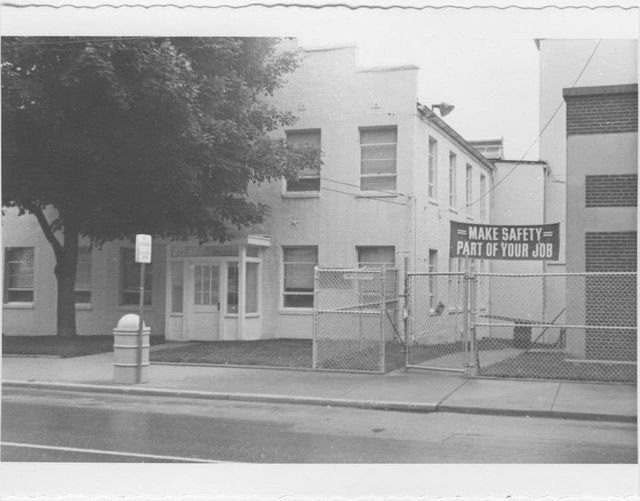
The January and Wood Company ceased operations in 2004.
- Bodley, Temple. History of Kentucky: The Blue Grass State. Vol. 4. Chicago:
- S. J. Clarke, 1928.Comer, Mrs. P. W., ed. As We Look Back: Maysville,1883–1933. Centennial Souvenir Book. Maysville,Ky:
- Daily Independent, 1933
- Connelley, William Elsey, and E. M. Coulter. History of Kentucky. 5 vols. Chicago: American Historical Society, 1922.
- Harris Kentucky Manufacturers Directory. Twinsburg, Ohio. Harris Infosource, 1987–2006.
- Johnson, E. Polk, A History of Kentucky and Kentuckians. Chicago; Lewis, 1912.Kentucky Industrial Directory. Frankfort, Ky: Kentucky Department of Economic Development, 1949–1961.
- Perrin, William Henry, J. H. Battle, and G. C. Kniffin. Kentucky: A History of the State. Louisville, Ky: F. A. Battey, 1888.
- Seiller, Edward F. Kentucky Natural Resources, Industrial Statistics, Industrial Directory Descriptions by Counties. Kentucky Bureau of Agriculture, Labor, and Statistics, Bulletin 34. Frankfort,Ky: State Journal, 1929.
- The Spirit of a Greater Maysville and Mason County. Maysville, Ky: Daily Independent, 1935.
- Thompson, Charles. Going on 200: Century-Old Businesses in Kentucky. Prospect, Ky., Harmony House, 2003.
- Charles D. Hockensmith
Above excerpted from page 485 – 486 of THE ENCYCLOPEDIA OF NORTHERN KENTUCKY THE UNIVERSITY PRESS OF KENTUCKY ISBN 978-0-8131-2565-7A